Charlie Munger once said, "It is remarkable how much long-term advantage people like us have gotten by trying to be consistently not stupid, instead of trying to be very intelligent."
This applies perfectly to website design.
Most creators spend their energy trying to make their website "amazing"—chasing the latest design trends, adding animations, picking the perfect fonts. Meanwhile, they're making basic mistakes that guarantee failure.
Inversion thinking: instead of asking "what makes a website great?", ask "what makes websites fail?" Then avoid those things.
After auditing hundreds of creator websites, we've identified the 5 mistakes that appear over and over. Eliminate these, and you're already ahead of 90% of your competitors.
Mistake #1: The "About Me" Homepage
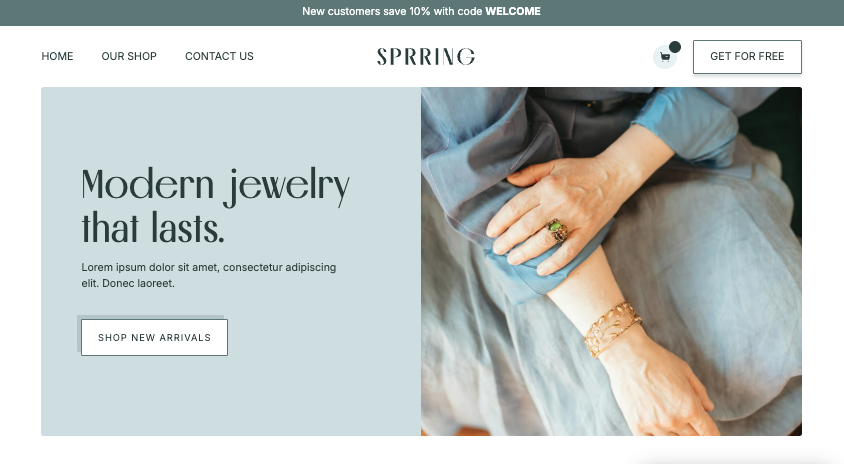
Here's what we see constantly: a creator's homepage that reads like a biography.
"Hi, I'm Sarah! I'm a digital marketing strategist with 10 years of experience. I started my journey in 2014 when I was working at a Fortune 500 company..."
Two paragraphs later, we still don't know what Sarah offers or why we should care.
Why this fails:
Visitors don't care about you. Not yet. They care about their problems. They arrived at your site because they have a need—and within 3 seconds, they're asking: "Is this for me? Can this help me?"
If the first thing they see is your story, they bounce.
The fix:
Lead with the transformation you provide, not your credentials.
Instead of: "I'm a marketing strategist with 10 years of experience..."
Write: "Turn your expertise into a 6-figure course—without spending months on content creation."
Your story belongs on your About page, or as supporting proof after you've hooked them. Never lead with it.
Real example:
We rebuilt a business coach's site that was leading with a 200-word bio. The new hero: "Go from overwhelmed solopreneur to CEO of a business that runs without you—in 90 days." Conversion rate tripled.
Mistake #2: The Platform Dependency Trap
We see this constantly: creators with 50,000 Instagram followers sending all their traffic... back to Instagram.
Their website is an afterthought—a single page with links to their social profiles and maybe a newsletter signup.
Why this fails:
- You don't own your audience. Instagram changes an algorithm, and your reach drops 80% overnight. We've seen it happen to dozens of creators.
- Social profiles don't sell. They build awareness. The conversion happens on your website, where you control the narrative, the flow, and the ask.
- Link-in-bio pages are not websites. Linktree gets 0.5% conversion rates. A real landing page gets 5-15%.
The fix:
Your website should be the hub. Everything flows there, not away from it.
- Capture emails (you own that list)
- Sell your products directly (higher margins than through platforms)
- Build SEO equity (compounds over time)
- Control the conversion path (no distractions)
Social media is for distribution. Your website is for conversion. Don't confuse them.
The math:
A creator with 10,000 email subscribers can generate $50,000-$200,000 per year from product launches. A creator with 100,000 social followers but no email list? They're one algorithm change away from zero.
Mistake #3: The Feature Dump
Creators love to list everything they do:
- 1-on-1 coaching
- Group programs
- Online courses
- Digital templates
- Speaking engagements
- Consulting
- Corporate workshops
All on the homepage. All competing for attention.
Why this fails:
When everything is important, nothing is important. The visitor has no clear path. They see options, not a solution. And confused visitors don't buy—they leave.
The psychology:
Barry Schwartz's "Paradox of Choice" research shows that more options lead to fewer decisions. In one famous study, a display of 24 jam flavors got 3% of shoppers to buy. A display of 6 flavors? 30% bought.
Your website is the same. More offerings = fewer conversions.
The fix:
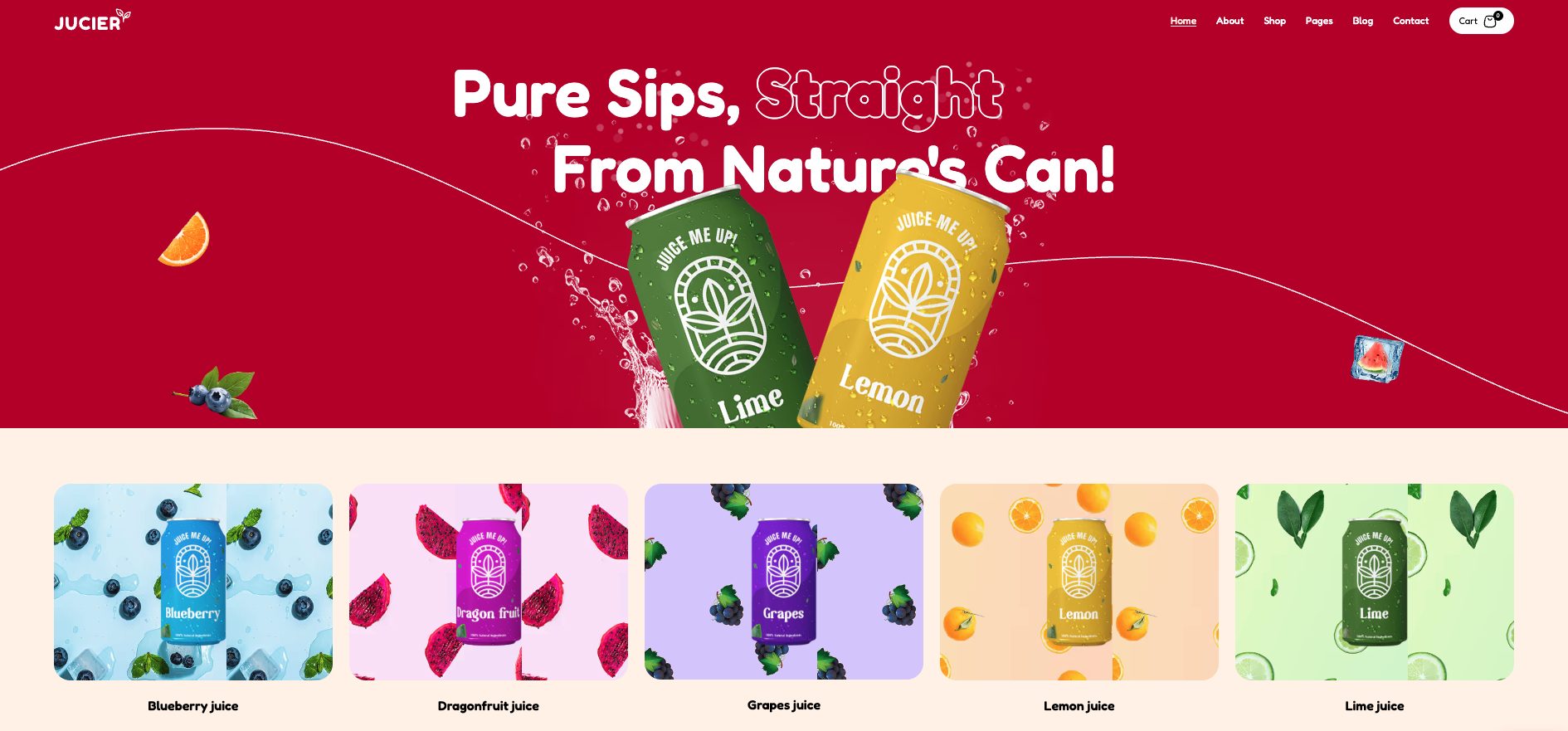
Pick one primary offer per page. If you have multiple products, create separate landing pages for each—but your homepage should push toward ONE thing.
For most creators, the priority should be:
- If you're building an audience: newsletter signup
- If you're selling a flagship product: that product
- If you're selling services: discovery call booking
Everything else is secondary. Organize it clearly, but don't let it compete with your main offer.
Mistake #4: Trust Delayed Until Death
Typical website structure:
- Hero section with big promise
- Features/Benefits
- More features
- Pricing
- Testimonials (at the bottom)
The testimonials—your most powerful trust builders—are buried where most visitors never see them.
Why this fails:
Scroll depth data across our client sites shows that 40% of visitors never scroll past the first viewport. Another 30% drop off by mid-page. Only 30% reach the bottom.
If your social proof is at the bottom, 70% of visitors never see it.
The fix:
Front-load your proof. Here's our recommended structure:
- Hero: Clear promise + primary CTA
- Immediately below: Social proof (logos, results, key testimonial)
- Then: Benefits/Features
- Sprinkle testimonials throughout
- Strong testimonial before final CTA
Types of proof to lead with:
- Best: Specific results ("Helped 500+ creators generate $12M in course sales")
- Strong: Recognizable logos ("Featured in Forbes, Entrepreneur, Inc.")
- Good: Numbers ("10,000+ students", "4.9/5 rating")
- Okay: Testimonials with photos and full names
- Weak: Anonymous testimonials or just text
Use the strongest proof you have. If you're just starting and don't have much, use your own credentials, or borrow authority ("Certified by X", "Trained at Y").
Mistake #5: Mobile Afterthought
Here's a stat that should terrify you: 65-80% of traffic to creator websites comes from mobile devices.
Yet most creators design for desktop first, then "make it responsive" as an afterthought. The result: buttons too small to tap, text too small to read, forms impossible to fill out, and layouts that break on smaller screens.
Why this fails:
Your Instagram audience clicks your bio link on their phone. Your Twitter followers tap through on mobile. Your newsletter readers open emails on mobile.
If your site is frustrating on mobile, you're losing 70%+ of your potential conversions.
The fix:
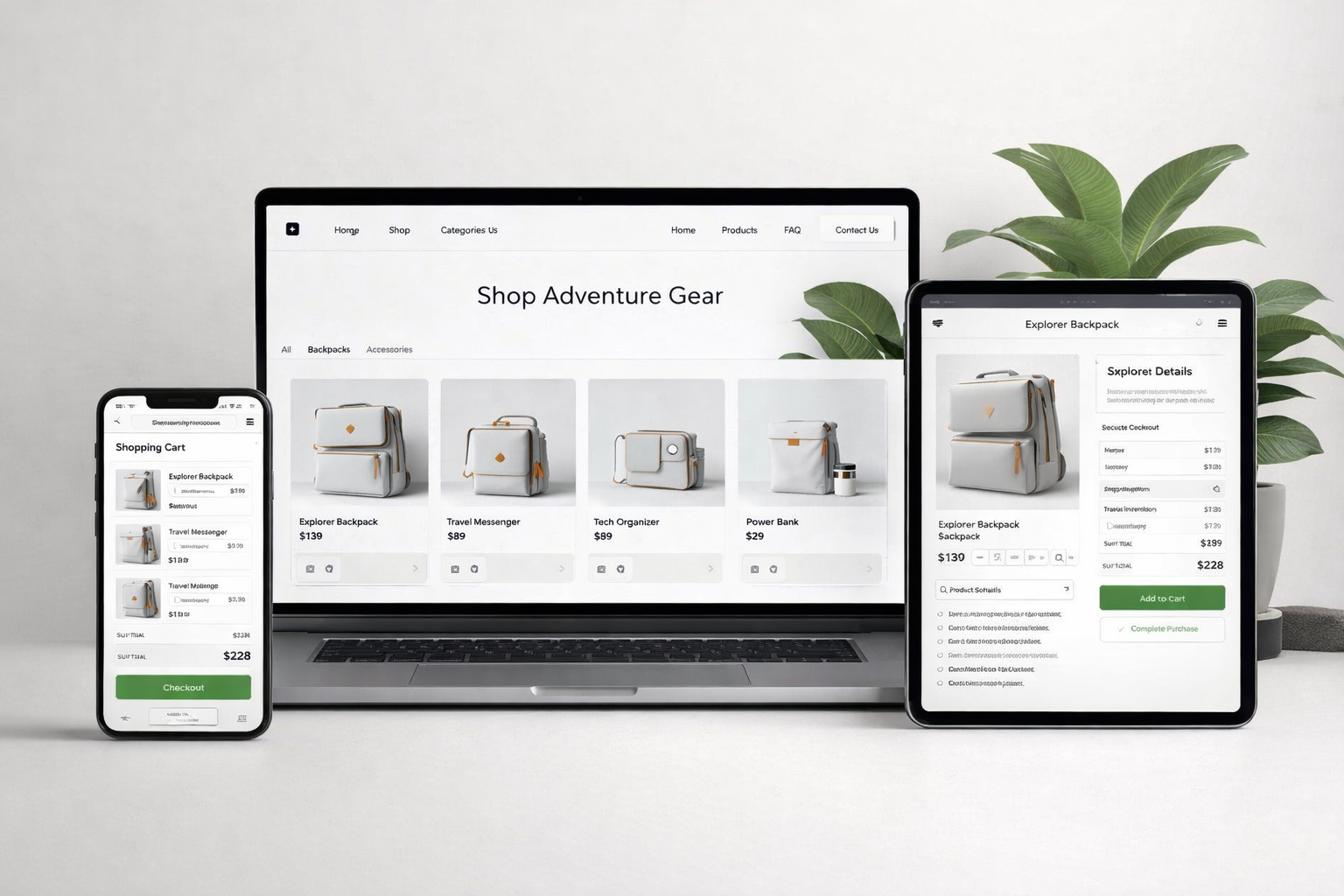
Design mobile-first. Literally. Start with the mobile layout, then expand to desktop.
Mobile-first checklist:
- Tap targets: Buttons at least 44x44 pixels. Easy to tap with a thumb.
- Text size: Body text at least 16px. Smaller causes zoom frustration.
- Forms: Large input fields. Use appropriate keyboard types (email keyboard for email fields, number pad for phone).
- Speed: Mobile users are impatient. If your site takes more than 3 seconds to load, 53% bounce.
- Thumb zone: Primary CTAs should be reachable by thumb in natural phone-holding position (bottom half of screen).
How to test:
Put your site on your phone. Try to complete your primary conversion action (buy, book, subscribe) using only your thumb. If it's frustrating, your visitors feel it too.
The Compound Effect of Avoiding Mistakes
Each of these mistakes doesn't just cause a small drop in conversions. They compound.
- About-me homepage: -30% (people bounce immediately)
- No website hub: -50% (can't capture or convert)
- Feature dump: -40% (confusion kills action)
- Trust delayed: -50% (skepticism wins)
- Mobile afterthought: -60% (majority can't convert)
A site making all five mistakes might only convert 0.1% of visitors. Fix them all, and you could see 5-10%—a 50-100x improvement.
The Munger Approach to Your Website
Instead of asking "How can I make my website amazing?", ask:
- Am I leading with me instead of the transformation?
- Am I sending traffic away instead of capturing it?
- Am I offering too many options?
- Am I hiding my proof at the bottom?
- Am I ignoring mobile users?
If yes to any of these, fix that first. Fancy design can wait.
"It is remarkable how much long-term advantage people like us have gotten by trying to be consistently not stupid."
Stop making these 5 mistakes, and you'll outperform 90% of creator websites. No fancy animations required.